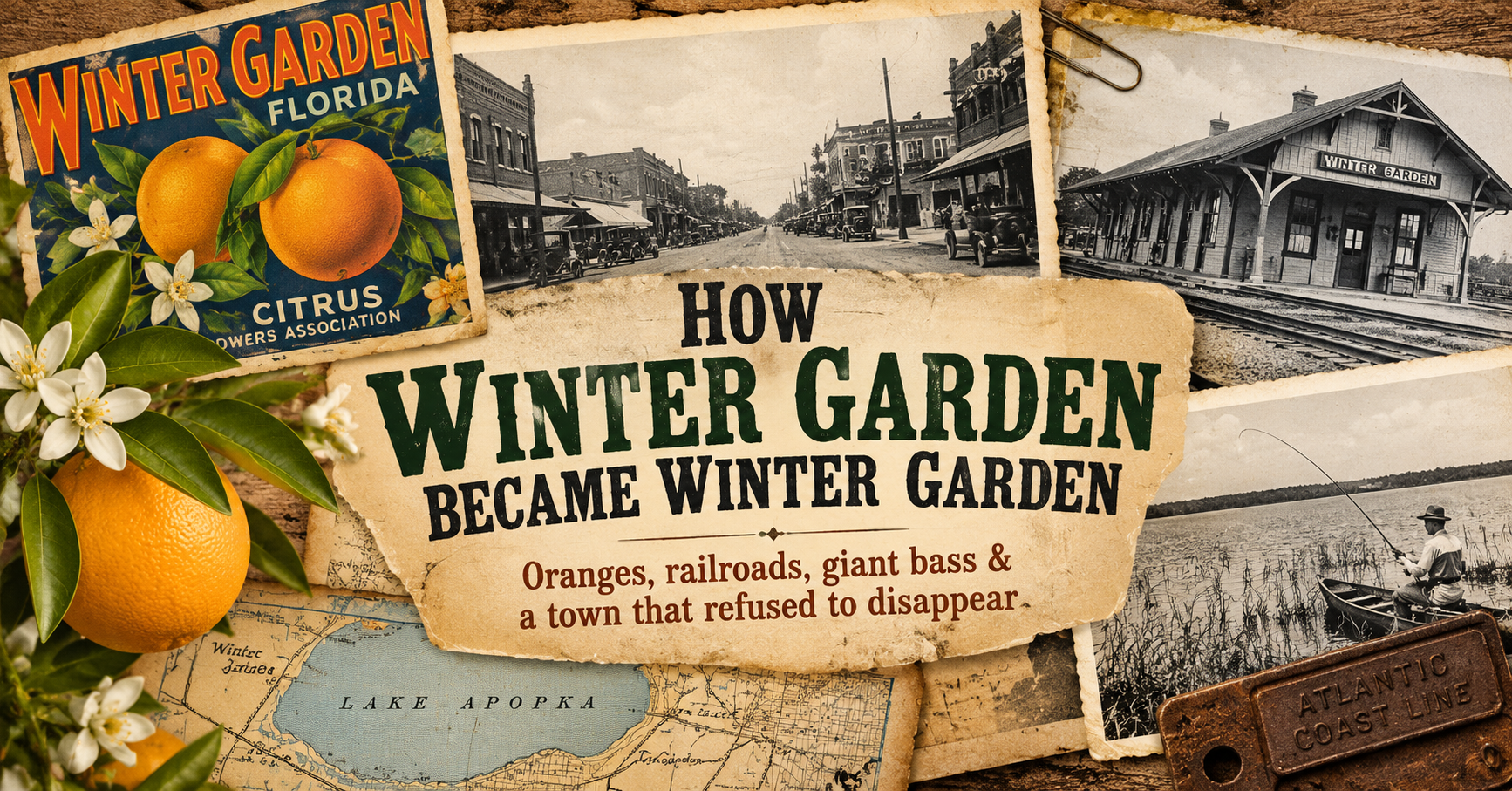

Oranges, Fire and a City Made of Brick
Winter Garden grew up surrounded by citrus.
Groves stretched across West Orange County. Packinghouses processed enormous quantities of fruit. Generations of local families either owned groves or earned their living working somewhere in the citrus industry.
Photographs preserved by the State Archives of Florida through Florida Memory show workers harvesting oranges in Winter Garden groves well into the twentieth century.
Citrus wasn’t quaint scenery.
It was the economy.
But early downtown Winter Garden had one fairly significant architectural problem.
A lot of it was made of wood.
Fire and wooden commercial districts have historically had a complicated relationship.
Major fires damaged and destroyed early wooden commercial buildings and packing facilities around Plant and Main Streets. As Winter Garden rebuilt, brick increasingly replaced wood.
That unfortunate chapter helped create something modern Winter Garden residents now treasure: the historic brick commercial district.
According to the City’s Historic Downtown District history, many of the buildings that give downtown its character today date from the early decades of the twentieth century.
Winter Garden kept growing around them.
And it’s worth remembering just how different Central Florida’s economy looked then.
There was no Walt Disney World.
There was no International Drive.
There wasn’t a theme-park skyline glowing in the distance.
Central Florida’s economy depended heavily on things that grew in the ground.
Around Winter Garden, that often meant oranges.
Vintage citrus labels preserved by Florida Memory are reminders that Winter Garden citrus wasn’t merely grown here — it was packed, branded, marketed and shipped to consumers elsewhere.
But oranges weren’t the only thing putting Winter Garden on the map.
The city also had something tourists wanted.
Really, really big fish.