Before There Was a Winter Garden
Before Plant Street had restaurants, before there was a Garden Theatre, and long before anyone was ordering a craft beer downtown, the thing that mattered here was Lake Apopka.
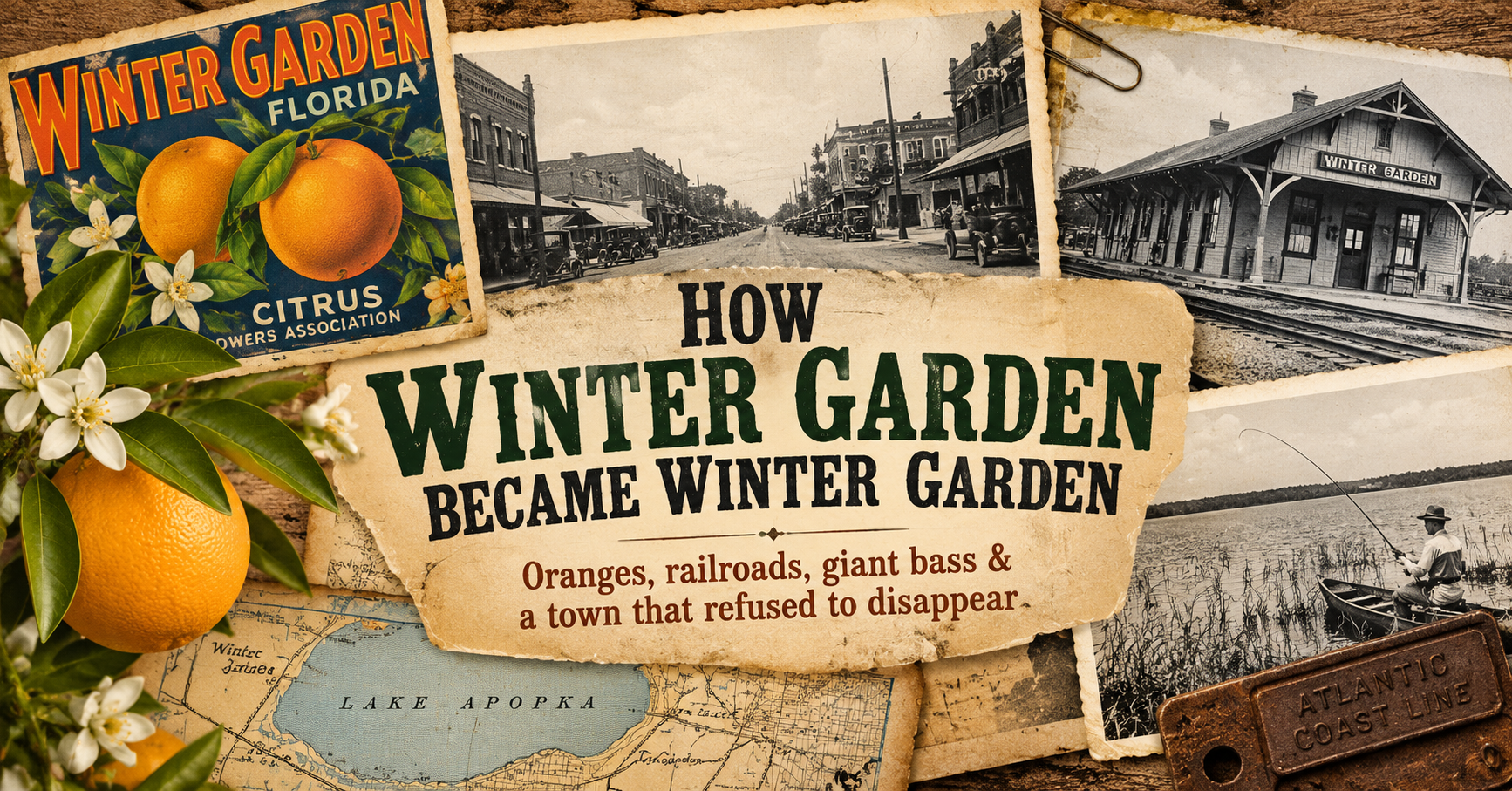
Settlers began establishing farms and homesteads along the lake’s southern shore in the 1850s. According to the City of Winter Garden’s history, the area’s fertile land quickly attracted agriculture, particularly vegetables and citrus.
There still wasn’t really a Winter Garden.
There wasn’t even a downtown waiting to become one.
Just farms, groves, homesteads and a very big lake.
The rich agricultural land surrounding Lake Apopka gave settlers a pretty compelling reason to stay. Central Florida’s climate also meant farmers could grow things at times of the year when much of the country was considerably less interested in gardening.
That becomes important later.
For decades, these were essentially scattered agricultural communities. But growing a mountain of oranges or vegetables only gets you so far if there’s no practical way to ship them hundreds of miles away.
Then the railroad showed up.
Rail service reached the area during the 1880s, connecting local growers to markets far beyond Central Florida. As transportation improved, businesses, packing facilities and homes began clustering around the railroad corridor.
By the turn of the century, a commercial district was developing around Plant Street.
The scattered farming community was becoming an actual town.
Winter Garden wasn’t simply built beside the railroad.
In a very real sense, the railroad helped create Winter Garden.
And somewhere along the way, somebody had to give the place a name.
That’s where things get weird.